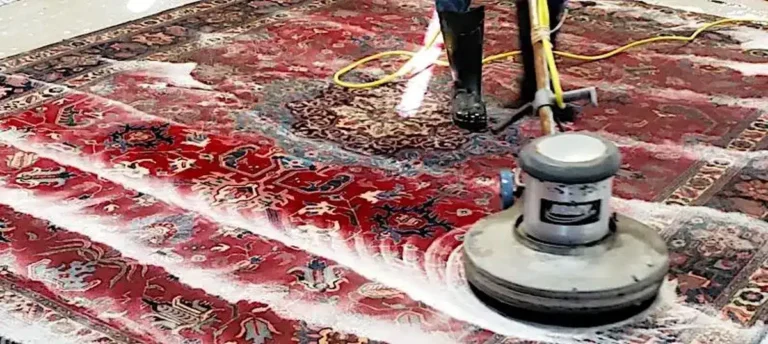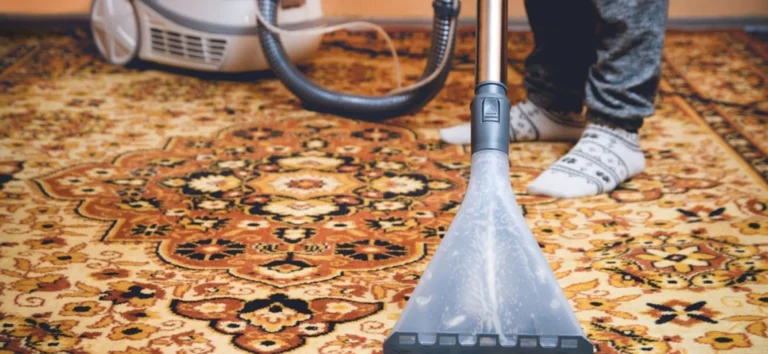
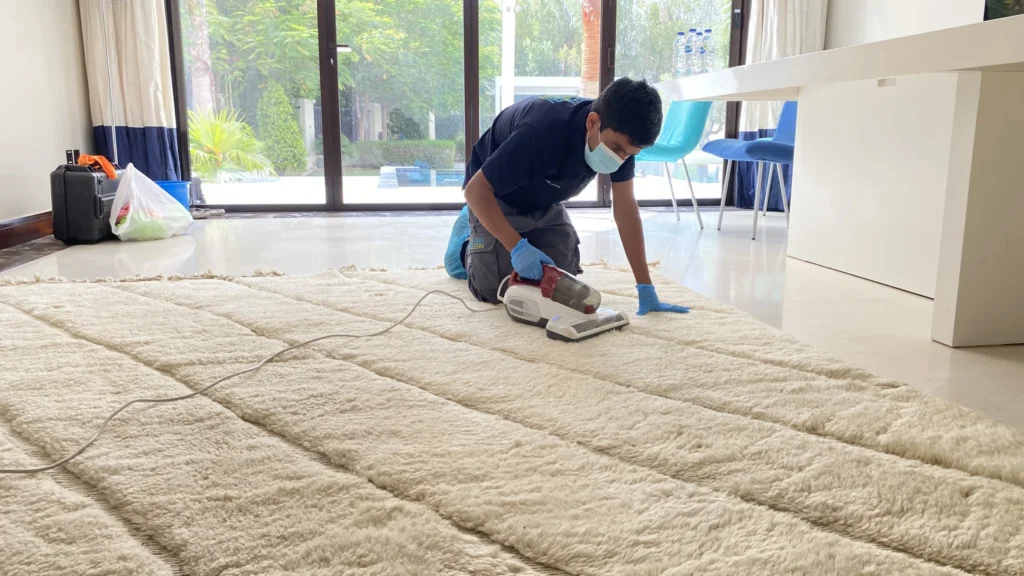
The method, in one paragraph: work out what the stain is and what the carpet is made of, test your solution somewhere hidden, apply a small amount, let it sit, blot rather than scrub, rinse with plain water, blot again, and dry it fast with airflow. Stop after two careful attempts. If the stain comes back a day or a week later, it is almost never the same stain returning: it is wicking from below, or residue collecting soil, and the fix for each is different.
That last part is the half most guides leave out, so it has a section of its own further down. When a stain is past what you can do at home, professional stain removal is the next step, but plenty of what follows will save you the call.
Why deep stains are hard to remove
A carpet is three layers: the pile you see, the backing it is stitched into, and the pad underneath. A spill does not stop at the first. It runs down the fiber, through the backing and, if there is enough of it, into the pad, where it spreads sideways and sits. You are treating the top of something shaped like an iceberg.
Chemistry works against you too. Proteins in blood, milk, egg and urine denature with time and heat and bind harder to the fiber; tannins in wine, coffee and tea do much the same; oils spread sideways so the affected area grows. None of it yields to force. You are not fighting a lump of dirt, you are fighting a bond, and friction only damages the yarn.
Know your fiber first
| Fiber | How it behaves | What to avoid |
|---|---|---|
| Nylon | Durable, resilient, tolerates a wide range of cleaners. Common in homes, though we will not print a market-share figure we cannot source. | Chlorine bleach, which strips color permanently. Acid dyes in food coloring and some drinks dye it as well as the mill did. |
| Polyester | Soft, shrugs off water-based stains, attracts oily soil, more heat-sensitive than nylon. | Hot water and hard agitation, which mat it. Oily spotters left unrinsed. |
| Olefin (polypropylene) | Almost bleach-proof, because the color is in the fiber rather than on it. In exchange it loves oil and is easily damaged by friction heat. | Scrubbing, which melts and fuzzes the tips. Residue-leaving cleaners. |
| Wool | A protein fiber and the fussiest thing in most houses. Mildly acidic to neutral, as little water as possible, no heat, no scrubbing. | Anything alkaline, plus chlorine bleach, oxygen bleach and hydrogen peroxide. Heat with moisture and agitation, which felts it. |
| Blends | Behave like their most delicate component. | Treat a wool blend as wool. |
Removing a deep stain, step by step
-
Vacuum and test
Take the dry soil off first or you will make mud. Then put the solution on a hidden patch, blot it out, and look again 24 hours later for color or texture change.
-
Apply a small amount
Enough to reach as deep as the stain went, no more. Damp, never squelching. If pressing brings water up, you have overdone it.
-
Let it sit
Five to ten minutes. Chemistry needs time and force is no substitute. Mist it lightly if it starts to dry out.
-
Agitate gently, or not at all
Soft brush, light pressure, small movements. Stop the moment the pile fuzzes: that damage is permanent and shows more than the stain did.
-
Blot it out
Clean white cloths, firm pressure, fresh section each time, until no more color transfers. A wet and dry vacuum beats any product here.
-
Rinse with plain water and extract again
Repeat until what comes up is clear. Skipping this is why a spot goes gray two weeks later.
-
Dry it fast
Two careful attempts is the limit. A third is where people bleach, fuzz or brown their carpet, and those are worse-looking than the stain.
Stain by stain
| Stain | First try | Avoid | When to call |
|---|---|---|---|
| Red wine | Blot with cool water repeatedly, then a few drops of dish soap in cool water. On light colorfast synthetic carpet only, 3 percent hydrogen peroxide dabbed on and rinsed the moment the color goes. | Peroxide on wool, silk or anything dark. Heat. Salt left in the pile. | Dried wine on wool, or any sign of the carpet lightening |
| Coffee and tea | Cool water, then dish soap solution, then a diluted vinegar blot for the tannin, then rinse. | Hot water, which sets tannin harder. | A ring that keeps reappearing: that is wicking, see below |
| Grease and oil | Absorb first with baking soda, vacuum, then dish soap solution. For what remains, a solvent spotter applied to a cloth, never poured on the carpet. | Pouring solvent, which can reach the backing adhesive. Solvent on olefin without a test. | Large or repeated grease areas, and anything on olefin |
| Ink and dye | Dab with rubbing alcohol on a cloth, fresh section every time. Stop the moment it starts spreading. | Rubbing, which spreads dye sideways into clean carpet. | Permanent marker, printer ink, hair dye and food coloring are often genuinely permanent |
| Mud | Let it dry completely. Break it up, vacuum, then treat the color left behind. | Touching it while wet. | Rarely needed, if you wait |
| Blood | Cold water only, with a little dish soap. Patience. | Warm or hot water, which sets it permanently. | Large or old areas |
| Pet urine | Blot hard, rinse cool, then an enzyme cleaner per its label. Full method in the pet urine guide. | Heat, ammonia-based cleaners, and treating only the visible patch. | Smell returning on humid days, or a large area under UV: see Pet Stain & Odor Removal |
Why stains come back after cleaning
A stain that reappears is the most common complaint after any carpet cleaning: after a spray bottle, after a rental machine, and after a professional job, ours included. It is worth writing that down, because the usual version of this page blames the homeowner and stops there. Two things cause nearly all of it.
Wicking
As a carpet dries, moisture moves upward through the fibers by capillary action and takes dissolved material with it. If anything staining is still sitting in the backing or the pad, drying carries it back to the tips of the pile, where you can see it again. It is not the old stain returning; it is the part nobody removed, arriving. It usually shows up somewhere between a few hours and two days after cleaning, which is exactly late enough to look like the cleaning failed rather than like it was incomplete.
Residue
Detergent left in the pile stays tacky and pulls in soil from every footstep, so the treated patch grays faster than the carpet around it. This one builds over days and weeks rather than hours, and it gets worse until somebody rinses the area properly. It is the reason a spot can end up darker than it was before anyone touched it.
Which one you have
| What you see | When | Likely cause | What to do |
|---|---|---|---|
| The original shape, faintly, at the tips of the pile | Hours to two days | Wicking | Re-wet lightly, extract hard with a wet and dry vacuum, weight dry white towels on it overnight, fan on it |
| A patch that is greying and spreading slightly | Days to weeks | Residue | Rinse with plain warm water and extract until it comes up clean. No more detergent |
| Smell rather than a mark, worst on humid days | Weeks to months | Urine salts in the backing or pad | See the pet urine guide |
The mistakes that damage fibers
- Over-wetting. Water past the backing is in the pad and cannot be blotted back. It causes the wicking above and takes days to leave. The EPA advises drying wet materials within 24 to 48 hours.
- Bleach or ammonia. Chlorine bleach strips carpet color permanently; ammonia smells like urine to an animal and invites a repeat. The CDC warns never to mix bleach with ammonia or other cleaners, because it produces a poisonous gas.
- Heat on a set-in stain. Worth clearing up: most rental “steam cleaners” make no steam. They use hot tap water, which is quite hot enough to set an untreated protein stain. Pre-treat, then use the machine.
- Stiff brushes. Fuzzing is permanent, and a fuzzed patch catches the light differently for the rest of the carpet’s life.
- Going again and again. Repeated wetting and drying cycles are what cause browning, which looks worse than most stains.
When to call somebody
The stain keeps coming back
It is deeper than a towel reaches. Extraction is the difference.
Odor returning in humid weather
Urine salts in the backing or pad.
The area never fully dries
A moisture problem now, not a stain problem, with a 24 to 48 hour clock on it.
Damage from earlier tries
Bleached, fuzzed or browned. Stop before you add to it.
Wool, silk or a hand-knotted rug
Different fiber, different rules, expensive mistakes.
It is everywhere, not one spot
A whole-room clean costs less time and less risk than forty spot treatments.
Preventing the next one
Frequently asked questions
Why do carpet stains come back after cleaning?
Either wicking, where drying carries staining material up from the backing or pad, or residue, where leftover detergent collects soil. Wicking shows in hours to days, residue over days to weeks.
Can vinegar damage my carpet?
Diluted one part to four parts water it is usually fine on synthetic carpet after a spot test. On wool and silk keep it well diluted and stop if any color transfers. It does nothing for oily soil or dried urine.
How long does carpet take to dry after spot cleaning?
Is hydrogen peroxide safe on all carpets?
No. It is a bleach. 3 percent only, on light colorfast synthetic carpet, tested first and checked again after 24 hours. Never on wool or silk.
Can a rental carpet cleaner remove old stains?
Only after pre-treatment. Most rental machines use hot tap water rather than steam, and heat sets protein stains. Too much solution also drives the stain into the pad.
Are natural cleaners safer than store products?
Not automatically. Vinegar and baking soda both cause problems used wrongly. Products tested for carpet, such as those carrying the CRI Seal of Approval, are made for the fiber.
Related: why carpet stains come back, a guide to telling wicking from residue and browning, and how carpet fibers react to homemade cleaners.
Sources
Every outside fact on this page comes from one of these, linked to the page we took it from. All checked 18 September 2026.
- CDC, About Mold. Never mix bleach with ammonia or other cleaners.
- US EPA, A Brief Guide to Mold, Moisture and Your Home. Dry wet carpet within 24 to 48 hours.
- Carpet and Rug Institute, Seal of Approval program. Spot cleaners and solutions are tested as their own category.
- Carpet and Rug Institute, carpet cleaning and maintenance. Vacuum at least weekly; blot rather than scrub; deep clean every 12 to 18 months.
- ANSI/IICRC S100. Standard for Professional Cleaning of Textile Floor Coverings, 7th edition, 2021.
Who wrote and checked this guide
Stain winning?
Send a photo and tell us what it was and what you have already tried. If it is something you can finish yourself, we will tell you that.