You’ve tried everything. That wine stain from last month’s dinner party is still visible. The pet accident spot keeps reappearing every time the humidity rises. You’ve scrubbed, blotted, and sprayed countless products, yet the deep carpet stain remains or worse, the area now looks fuzzy and worn.
Deep carpet stains are frustrating precisely because they don’t respond to surface-level cleaning. Unlike fresh spills that sit on top of carpet fibers, deep stains have penetrated into the yarn structure, backing, and sometimes even the padding below. This creates a challenge: you need enough cleaning power to break down embedded stains, but not so much force that you damage the delicate fiber structure.
This guide will teach you how to remove deep carpet stains safely without damaging fibers. You’ll learn why certain stains resist removal, which cleaning methods work for different carpet types, and when DIY efforts should stop. Most importantly, you’ll understand the science behind safe stain removal so you can make informed decisions about your carpet care.
Why Deep Carpet Stains Are Hard to Remove
Understanding why deep stains resist removal helps you approach them more effectively. When liquid spills onto carpet, it doesn’t just sit on the surface it travels downward through three distinct layers.
First, the liquid contacts the visible carpet fibers, where dyes, proteins, or oils can immediately begin bonding with the yarn. If not addressed within minutes, the substance continues traveling through the fiber twist and reaches the carpet backing. The backing, typically made of latex or synthetic materials, can absorb and hold staining compounds. In severe cases, the liquid penetrates all the way to the carpet padding underneath, creating a reservoir that can wick back up through the carpet long after you think the stain is gone.
The chemistry of stain bonding makes removal progressively harder over time. Proteins in organic stains like blood, urine, or food undergo a process called denaturation when exposed to heat or time. These proteins literally change their molecular structure and bind more tightly to carpet fibers. Tannins in wine, coffee, and tea form similar bonds. Oil-based stains spread laterally through fibers, making the affected area larger than the original spill.
This is why aggressive scrubbing often fails. You’re not just fighting the visible stain you’re battling a chemical bond that has formed between the staining substance and the carpet fiber itself. Scrubbing with excessive force doesn’t break that bond; it just damages the fiber structure, creating permanent fuzzing, fraying, or texture changes that can’t be reversed.
Understanding Carpet Fiber Types
Your carpet’s fiber type determines which cleaning methods are safe and effective. Using the wrong approach can cause irreversible damage, so identifying your carpet type is the essential first step.
Synthetic Fibers
Nylon is the most common and durable carpet fiber, found in about 60% of residential carpets. It tolerates a wider range of cleaning solutions and can handle slightly more aggressive treatment than other fibers. Nylon resists most acids and alkalis, making it compatible with many commercial cleaners. However, it can be damaged by chlorine bleach, which causes permanent yellowing or color loss.
Polyester carpets have grown in popularity due to their softness and stain resistance. They naturally repel water-based stains but can attract oil-based stains. Polyester is more sensitive to heat than nylon, so hot water extraction requires lower temperatures. The fibers can also mat down more easily if scrubbed too vigorously.
Olefin (polypropylene) is commonly used in commercial settings and basement carpets because it resists moisture and mildew. While highly resistant to water-based stains, olefin attracts oils like a magnet. Many household cleaners contain oils as carriers, which can actually make olefin carpets dirtier if not thoroughly rinsed.
Natural Fibers
Wool is a premium natural fiber that requires the gentlest approach. It’s naturally stain-resistant and flame-retardant, but it’s also pH-sensitive. Solutions with a pH above 8 or below 5 can damage wool’s protein structure, causing shrinkage, yellowing, or fiber breakdown. Wool also cannot tolerate excessive moisture or heat over-wetting can cause permanent shrinkage and shape distortion.
Many carpets blend wool with synthetic fibers for durability. These blends require you to treat the carpet as if it were pure wool, using the most conservative cleaning approach to protect the natural fibers.
If you’re uncertain about your carpet type, check the manufacturer’s label on the back of a loose carpet sample or in a closet. When in doubt, test any cleaning solution on an inconspicuous area and wait 24 hours to check for color change, texture alteration, or other damage.
Carpet-Safe Stain Removal Fundamentals
Successful deep stain removal without fiber damage follows specific principles that work across all carpet types. Understanding these fundamentals prevents the most common mistakes.
Blotting vs. Scrubbing
Blotting transfers liquid from the carpet to an absorbent material through capillary action. Place a clean white cloth or several layers of white paper towels on the stain and apply firm, steady pressure. The key word is pressure, not friction. You’re trying to pull moisture upward, not grind it deeper into the fibers.
Scrubbing creates friction that damages carpet fibers in multiple ways. It frays the yarn tips, distorts the fiber twist, and spreads the stain laterally into previously clean areas. Even worse, scrubbing can push the staining substance deeper into the backing and padding, making the problem worse long-term. For deep stains, gentle agitation with a soft brush is acceptable after applying a cleaning solution, but the motion should be light and careful—more like teasing the fibers than scrubbing them.
Temperature Considerations
Heat can permanently set protein-based stains like blood, egg, or dairy. Hot water causes proteins to denature and bond more strongly with fibers, creating stains that resist all future removal attempts. For protein stains, always use cool or lukewarm water (below 100°F).
Warm water (100-120°F) works well for general cleaning and helps activate many cleaning solutions without risking protein damage. Hot water (140°F and above) should only be used on specific grease or oil stains in synthetic carpets, and never on wool or protein-based stains.
pH Balance and Residue Control
Carpet fibers tolerate a pH range of approximately 5 to 9, and using cleaners outside this range can damage fibers or leave residues, which aligns with guidance on safer household cleaning chemicals from federal environmental agencies.
Equally important is removing all cleaning solution residue. Residue left in the carpet acts like a dirt magnet it’s sticky and attracts soil from foot traffic, causing the area to resoil rapidly and sometimes appear darker than surrounding carpet. Thorough rinsing with clean water and complete extraction of both the cleaning solution and rinse water prevents this problem.
Testing in Hidden Areas
Never apply any cleaning solution directly to a visible stain without testing first. Find an area that won’t be seen—inside a closet, behind furniture, or under a sofa cushion. Apply the solution, let it sit for the recommended time, blot it out, and check immediately and again after 24 hours for color bleeding, texture changes, or fiber damage. This simple step prevents turning a small stain into a large discolored area.
Step-by-Step: How to Remove Deep Carpet Stains Safely
This general process works for most deep stains in residential carpets. Specific stain types may require modifications, which are covered in the next section.
- Pre-treatment and preparation: Remove all loose debris from the stained area. Vacuum thoroughly to remove any dry particles that could turn to mud when wet. Identify the stain type if possible, as this determines which cleaning solution to use.
- Apply cleaning solution: Pour or spray a small amount of your chosen cleaning solution onto the stain. For deep stains, you need enough solution to penetrate as deeply as the stain itself, but not so much that you’re flooding the carpet. A good rule is to make the carpet damp, not soaking wet.
- Dwell time: Allow the solution to sit on the stain for 5-10 minutes. This gives it time to break down the chemical bonds between the stain and the carpet fibers. Don’t let it dry if the area starts to dry before you’ve finished, mist it lightly with more solution.
- Gentle agitation: Using a soft-bristled brush or clean cloth, very gently work the solution into the stain using small circular motions. The goal is to help the solution penetrate and lift the stain, not to scrub aggressively. If you see fibers fuzzing or the texture changing, stop immediately and use lighter pressure.
- Extraction and blotting: This is the most critical step. Press clean white cloths or paper towels firmly onto the area to absorb the cleaning solution and dissolved stain. Rotate to fresh sections of cloth frequently. Continue until no more color transfers to the cloth. If you have access to a wet/dry vacuum or carpet extractor, use it to remove as much moisture as possible.
- Rinse thoroughly: Apply clean water to the area (using a spray bottle works well), then extract it using blotting or a wet vacuum. This removes cleaning solution residue that would otherwise attract dirt. Repeat until the water you extract is clear.
- Dry completely: Use fans or open windows to promote air circulation. Place clean white towels over the damp area and weigh them down to wick out remaining moisture. Never walk on the carpet until it’s completely dry, as wet fibers are more vulnerable to crushing and damage. Proper drying typically takes 6-12 hours depending on humidity and airflow.
If the stain remains visible after the first attempt, you can repeat the process once. If two careful attempts don’t remove the stain, additional DIY efforts are unlikely to help and may risk damaging the carpet.
Stain-Specific Guidance
Different stains require different approaches because they have distinct chemical properties. Here’s what works and what doesn’t for the most common deep carpet stains.
Pet Stains (Urine, Feces, Vomit)
Pet stains combine proteins, bacteria, and in the case of urine, uric acid crystals. The crystals bond with carpet fibers and reactivate when exposed to moisture or humidity, which is why old pet stains can smell fresh again during summer.
Enzymatic cleaners are the gold standard for pet stains because they actually digest the organic matter rather than just masking the odor. Apply the enzymatic cleaner liberally enough to reach as deeply as the urine penetrated (which is often into the padding). The enzymes need moisture to work, so keep the area damp for the recommended time on the product label usually several hours or overnight. Don’t rinse too quickly or you’ll wash away the enzymes before they finish breaking down the stain.
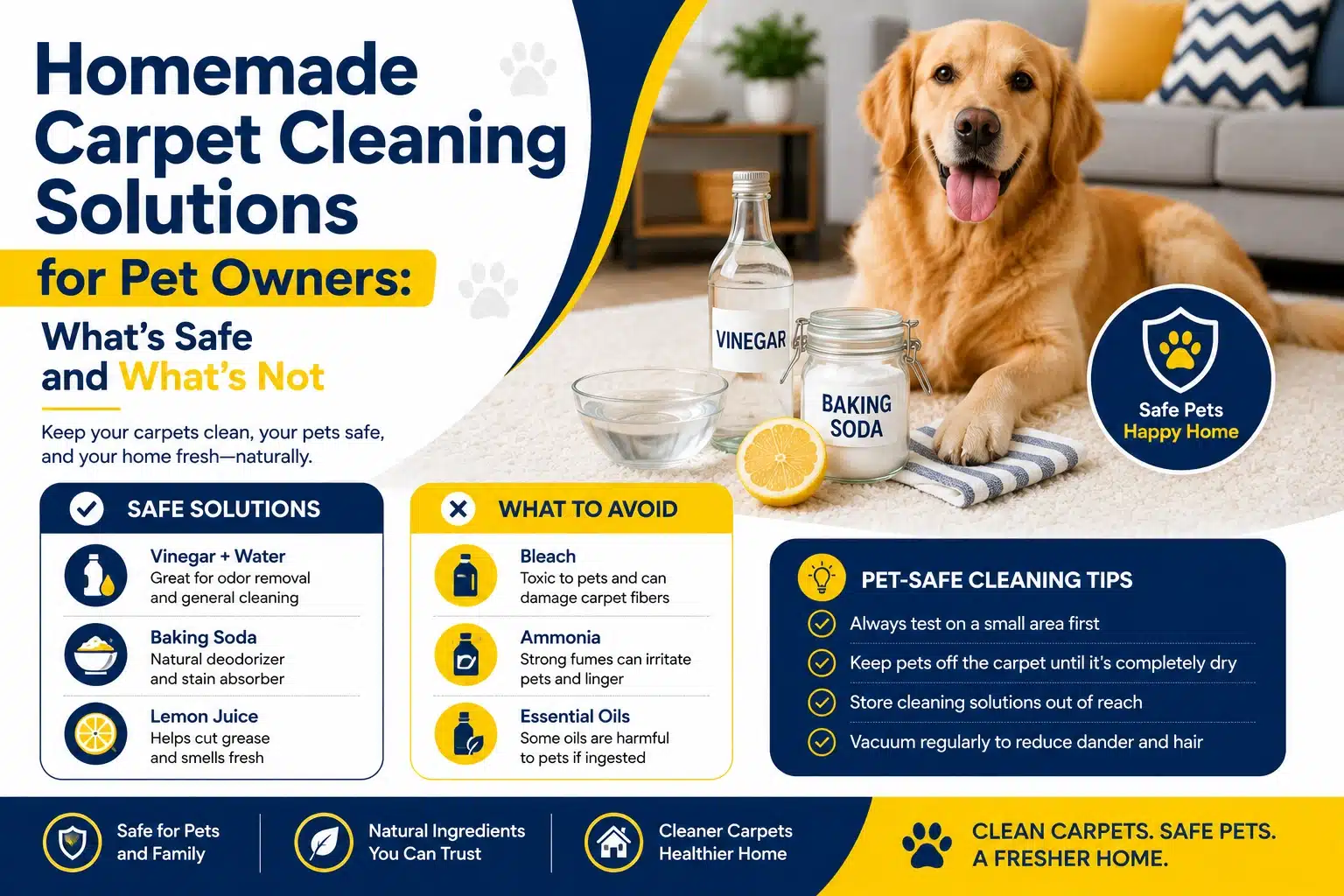
What doesn’t work: vinegar, while popular online, only neutralizes odor temporarily and doesn’t break down uric acid crystals. Ammonia-based cleaners smell like urine to pets and can encourage remarking. If the enzymatic approach doesn’t eliminate the odor completely after two applications, the padding is likely saturated and needs professional attention or replacement.
Red Wine
Red wine contains anthocyanins (the compounds that make it red) and tannins that bind readily to carpet fibers. Acting fast is crucial fresh wine spills can often be removed completely, while dried wine stains may be permanent.
For fresh or recently set wine stains, a mixture of dish soap (one teaspoon) and hydrogen peroxide (one cup) works well on synthetic carpets. The hydrogen peroxide oxidizes the wine pigments, breaking them down into colorless compounds. Apply the solution, let it sit for a few minutes while watching for color change, then blot thoroughly.
Critical warning: never use hydrogen peroxide on wool carpets or dark-colored synthetic carpets without testing first, as it can bleach the carpet dye itself. For wool, stick to a mild detergent solution or wine-specific cleaning products designed for natural fibers.
Coffee and Tea
Coffee and tea stains are tannin-based and respond well to mild acidic solutions. White vinegar diluted with water (1:2 ratio) can help break down tannins. Apply, let sit for 5-10 minutes, then blot and rinse. For stubborn coffee stains on light-colored synthetic carpets, the hydrogen peroxide method described for wine can also work.
Coffee stains that have been set with heat (like from hot water extraction attempts) become much harder to remove because heat causes the tannins to bond more permanently with fibers. This is another reason to avoid hot water on untreated stains.
Grease and Oil
Oil-based stains require a solvent-based approach because oil and water don’t mix. Dry cleaning solvent or rubbing alcohol can dissolve grease, but use them carefully. Apply a small amount to a clean cloth (not directly to the carpet), then blot the stain from the outside edges toward the center to prevent spreading.
After the grease dissolves, you’ll need to remove the solvent residue with a dish soap solution, followed by thorough water rinsing. Multiple cycles of treatment and extraction are often necessary. Avoid using too much solvent, as it can damage carpet backing adhesives if it soaks through.
Ink and Dye-Based Stains
Ink stains are among the most challenging because modern inks are designed to be permanent. Rubbing alcohol can dissolve some inks, but permanent markers, printer ink, and hair dye often require professional intervention. The key is to dab with alcohol-dampened cloth repeatedly, using fresh sections of cloth each time to absorb the dissolved ink.
If you see the stain spreading or bleeding into a larger area, stop immediately. You may be making it worse. Dye-based stains, especially from food coloring or hair dye, may actually be permanent. These pigments chemically bond with carpet fibers in a way that DIY methods cannot reverse without damaging the carpet.
Common DIY Mistakes That Damage Carpet Fibers
Even well-intentioned cleaning efforts can permanently damage carpet when certain mistakes are made. Understanding what not to do is just as important as knowing the right techniques.
Over-Wetting
Flooding carpet with excessive water or cleaning solution causes multiple problems. The backing adhesive can separate, carpet can shrink or ripple, and mold or mildew can grow in the padding. Most critically, over-wetting wicks the stain deeper into the padding and subfloor, making it impossible to remove without professional equipment. Carpet should be damp during cleaning, never saturated. If you press on the carpet and water pools up, you’ve used too much.
Using Bleach or Ammonia
Chlorine bleach permanently removes color from carpet dyes, leaving white or yellow spots that cannot be repaired. Even diluted bleach can cause irreversible damage. Ammonia smells like pet urine and can encourage animals to remark the area. It can also react with other cleaning products to create toxic fumes. Neither product has a place in residential carpet stain removal.
Steam Cleaning Set-In Stains
Rental steam cleaners seem like powerful tools for deep cleaning, but they can permanently set protein-based stains and drive other stains deeper into the carpet. Steam cleaners heat water to very high temperatures exactly what you want to avoid with blood, pet stains, or other organic material. Always pre-treat and remove as much of a stain as possible before considering any heat-based cleaning method.
Scrubbing with Stiff Brushes
Hard scrubbing with stiff bristles creates permanent texture damage that shows even after the stain is gone. The fibers fray, lose their twist, and develop a fuzzy appearance that catches light differently than surrounding carpet. This creates a visible ‘halo’ around the cleaning area that many people mistake for remaining stain. Once fiber texture is damaged, it cannot be restored. Always use soft brushes and gentle pressure.
When DIY Methods Are No Longer Enough
Recognizing when a stain exceeds DIY capabilities prevents you from causing additional damage and helps you make informed decisions about next steps.
Signs the Stain Has Reached Padding or Subfloor
If you’ve successfully removed the visible stain but notice discoloration returning within days, the stain has likely penetrated to the padding. Surface cleaning cannot address padding contamination. Similarly, if the stain area feels consistently damp or never fully dries even with fans running, moisture has saturated the padding and may be causing mold growth underneath.
Dark spots that appear in the same location after cleaning or during humid weather indicate the stain source is below the carpet fibers. Each time moisture is introduced from humidity, cleaning, or even mopping nearby hard floors contamination wicks up from the padding through the carpet fibers.
Odor Reactivation in Humidity
Pet urine odors that disappear when the carpet is dry but return during summer or rainy periods are a clear sign that uric acid crystals remain in the padding. These crystals can’t be reached by topical cleaning. The bacteria that create the odor remain dormant when dry but reactivate with any moisture introduction. No amount of surface cleaning will eliminate this problem.
Why Repeated Cleaning Attempts Can Worsen Damage
Each cleaning attempt introduces moisture, agitation, and chemical solutions to carpet fibers. Repeated cleaning cycles, especially when unsuccessful, cumulatively stress the fiber structure. The twist can relax, fiber tips can fray, and the backing adhesive can weaken. Color loss may occur from repeated chemical exposure, even if individual applications seem safe.
More concerning, repeated wetting and drying cycles can cause browning a permanent discoloration where carpet backing materials leach into the fiber, creating brown or tan stains that are impossible to remove. This type of damage is more noticeable than many original stains and represents permanent carpet damage.
Generally, if two thorough, methodical cleaning attempts using appropriate techniques haven’t removed or significantly improved a stain, additional DIY efforts will likely cause more harm than good. This is the point to evaluate whether the stain is acceptable to live with or whether the situation requires professional intervention with specialized equipment and training.
Preventing Future Deep Carpet Stains
The best approach to deep carpet stains is preventing them from forming in the first place. While you can’t prevent every spill, you can minimize the severity and frequency of deep staining.
Immediate Response Tips
Speed is everything with fresh spills. Blot immediately within the first 60 seconds if possible. Keep clean white cloths or paper towels readily accessible in high-risk areas like dining rooms, home offices, or near pet feeding stations. The faster you absorb liquid, the less time it has to penetrate deep into carpet layers.
For solid spills, scrape up as much material as possible before introducing any moisture. A spoon or dull knife works well. Removing solids prevents you from spreading them into a larger area when you start wet cleaning.
Protective Treatments
Many carpets come with factory-applied stain protection treatments like Scotchgard or similar products. These treatments create a barrier that gives you more time to clean spills before they penetrate fibers. However, these protections degrade over time with foot traffic and cleaning.
Reapplication of protective treatments is possible, though it requires careful product selection and proper application. Some DIY products are available, but improper application can leave residue that attracts dirt. The protective barrier only works if it’s applied evenly and allowed to cure properly.
Maintenance Habits
Regular vacuuming removes dry soil that can become embedded staining when combined with spills. Vacuum high-traffic areas at least twice weekly and all carpeted areas weekly at minimum. Use entrance mats to capture dirt and moisture before they reach carpet, and clean these mats regularly so they don’t become sources of dirt themselves.
Addressing small spots immediately prevents them from becoming deep stains. Keep a spot cleaning kit with basic supplies: white cloths, a spray bottle with water, a mild detergent solution, and appropriate cleaners for your specific carpet type. The investment in immediate spot treatment is far less than the cost of dealing with deep stains later.
Frequently Asked Questions
Can vinegar damage my carpet?
White vinegar diluted with water (1:2 ratio or weaker) is generally safe for most synthetic carpets, but it should never be used on wool or natural fiber carpets. The acidity can damage protein-based fibers and alter dyes. Even on synthetic carpet, vinegar provides minimal stain removal effectiveness compared to purpose-formulated cleaners, and it doesn’t break down the compounds in pet urine stains despite popular claims.
How long does carpet need to dry after stain removal?
Properly cleaned carpet should dry within 6-12 hours with good airflow. If carpet remains damp for more than 24 hours, you’ve likely used too much water and risk mold growth. Use fans, dehumidifiers, or air conditioning to promote drying. Never walk on damp carpet as the fibers are more vulnerable to crushing and texture damage when wet.
Why do stains sometimes come back after cleaning?
Stain reappearance, called wicking, happens when contamination in the carpet backing or padding draws back up through the fibers as the carpet dries. It can also result from incomplete rinsing cleaning solution residue left in the carpet attracts dirt and makes the area appear stained. If a stain returns after proper cleaning and thorough rinsing, the contamination has penetrated deeper than DIY methods can reach.
Is it safe to use hydrogen peroxide on all carpets?
No. Hydrogen peroxide acts as a bleaching agent and can permanently lighten or discolor dark carpets and natural fibers like wool. It’s only safe for light-colored synthetic carpets and must always be tested in an inconspicuous area first. Use a 3% solution (standard household strength), never higher concentrations. Even on appropriate carpets, limit contact time to avoid over-lightening.
What’s the difference between cleaning and damaging when agitating a stain?
Safe agitation uses light pressure with a soft brush in small circular motions, just enough to work the cleaning solution into the fibers. You should never see the carpet texture changing, fibers separating, or a fuzzy appearance developing. If you notice any of these signs, you’re using too much pressure. The goal is to help the cleaning solution reach the stain, not to mechanically scrub it away.
Can I use a carpet cleaner machine on old, set-in stains?
Rental carpet cleaning machines can help with some set-in stains, but only after proper pre-treatment. Never use hot water on protein-based or unknown stains, as heat can permanently set them. The machine should extract cleaning solution, not drive it deeper. If pre-treatment doesn’t show improvement, running a carpet cleaner over the area is unlikely to help and may worsen the problem by pushing the stain into the padding.
Are natural cleaning solutions safer for carpet than commercial products?
Not necessarily. While some natural solutions work well for specific applications, others can damage carpet just as easily as harsh chemicals. For example, undiluted lemon juice or vinegar can alter carpet dyes, and baking soda can leave difficult-to-remove residue in carpet fibers. Commercial products formulated for carpet cleaning have been tested for pH balance, residue levels, and fiber compatibility. The key is choosing the right product for your specific carpet type and stain, whether natural or commercial.
Moving Forward With Confidence
Removing deep carpet stains without damaging fibers requires understanding the science behind both stains and carpet construction. Success comes from using gentle techniques, appropriate cleaning solutions for your carpet type, and knowing when to stop DIY efforts before causing permanent damage.
The most important principle is that aggressive treatment rarely improves results. Patience, proper technique, and thorough rinsing achieve better outcomes than forceful scrubbing or harsh chemicals. When you approach stain removal methodically testing solutions, using appropriate temperatures, blotting instead of scrubbing, and extracting thoroughly you give yourself the best chance of success while protecting your carpet investment.
Remember that not all stains can be removed with DIY methods, and that’s okay. Recognizing the limits of home cleaning and understanding when contamination has exceeded the reach of household tools helps you make informed decisions. Whether you ultimately remove the stain yourself, learn to live with it, or seek professional assistance, you’ll do so with the knowledge needed to protect your carpet from unnecessary damage.