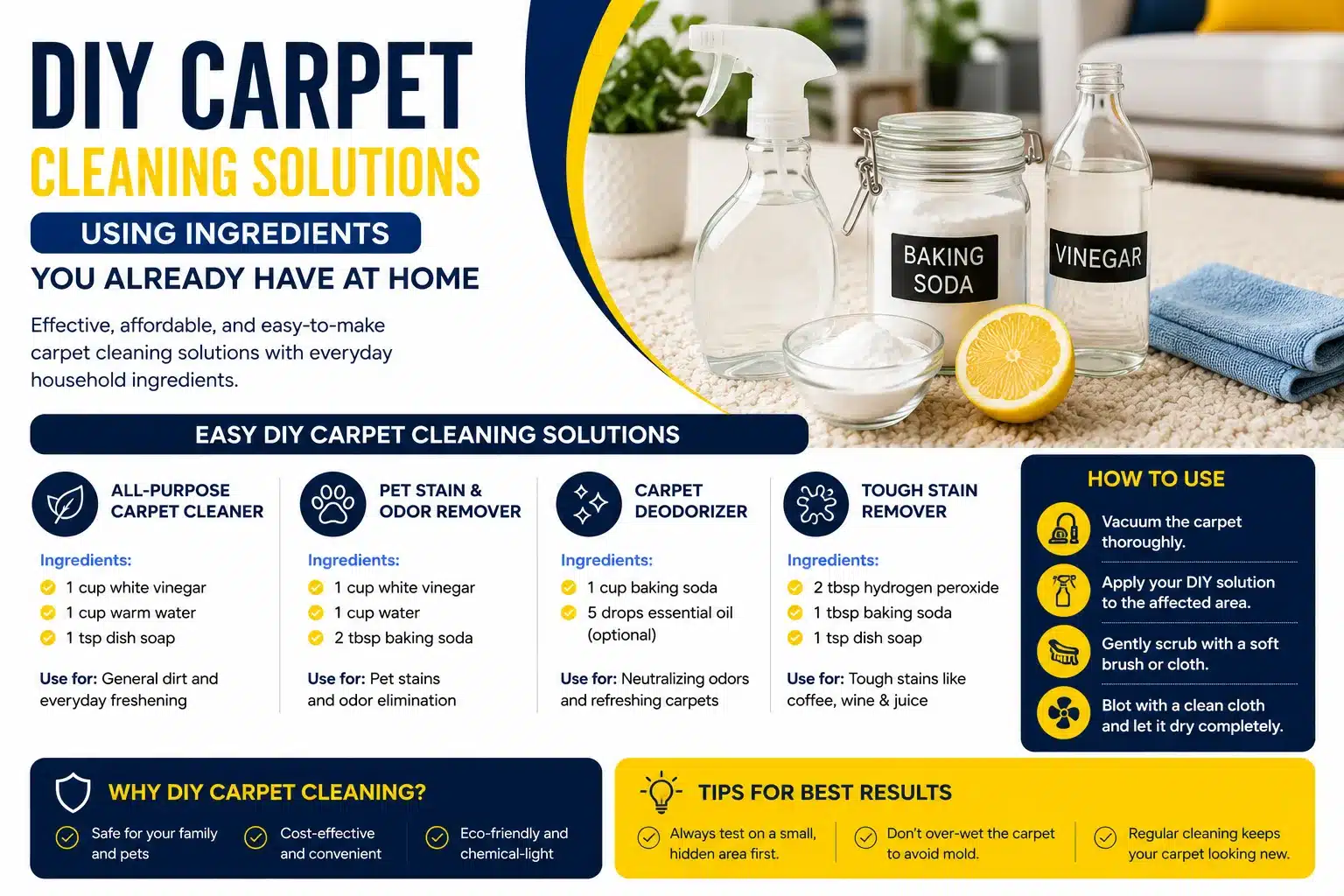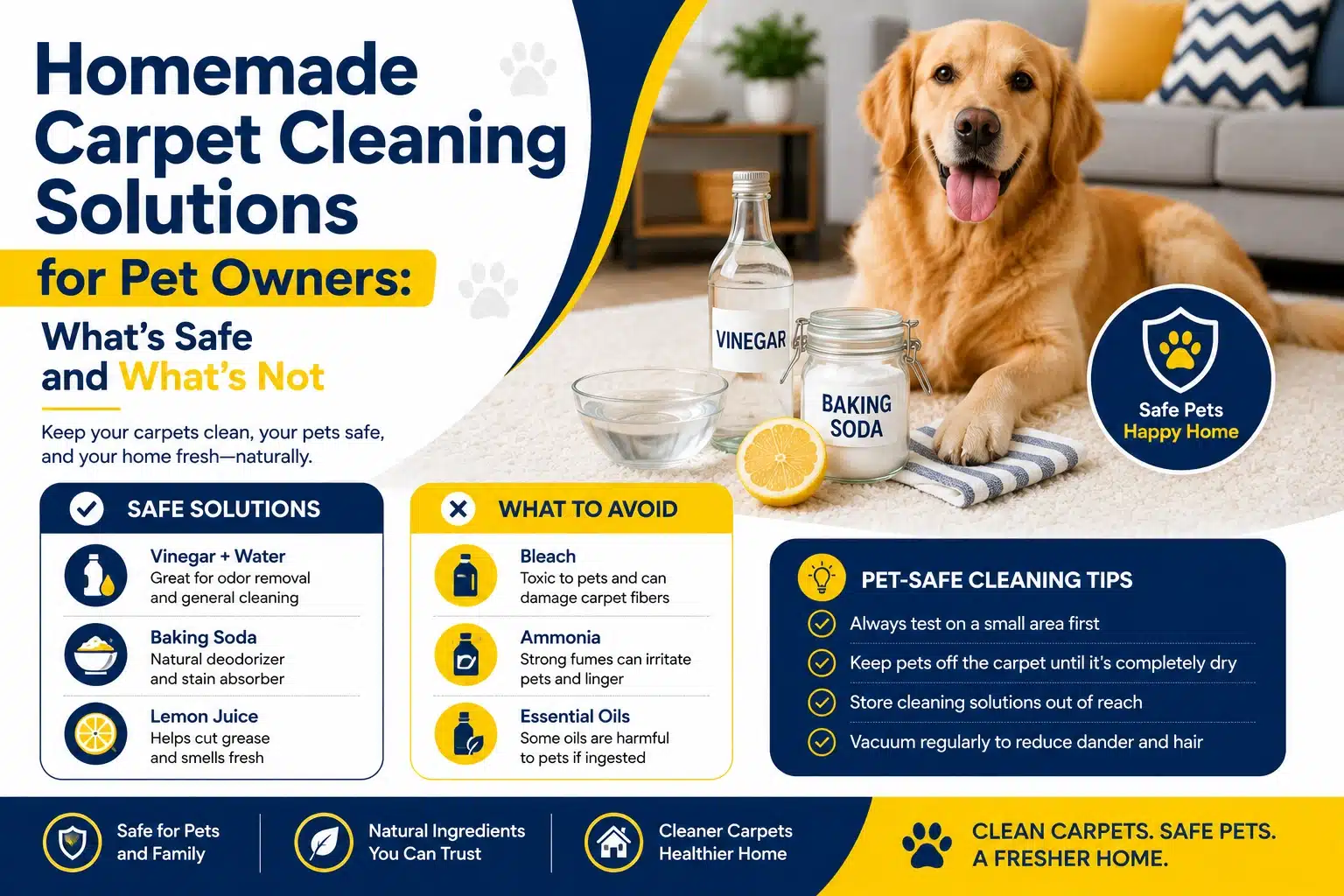
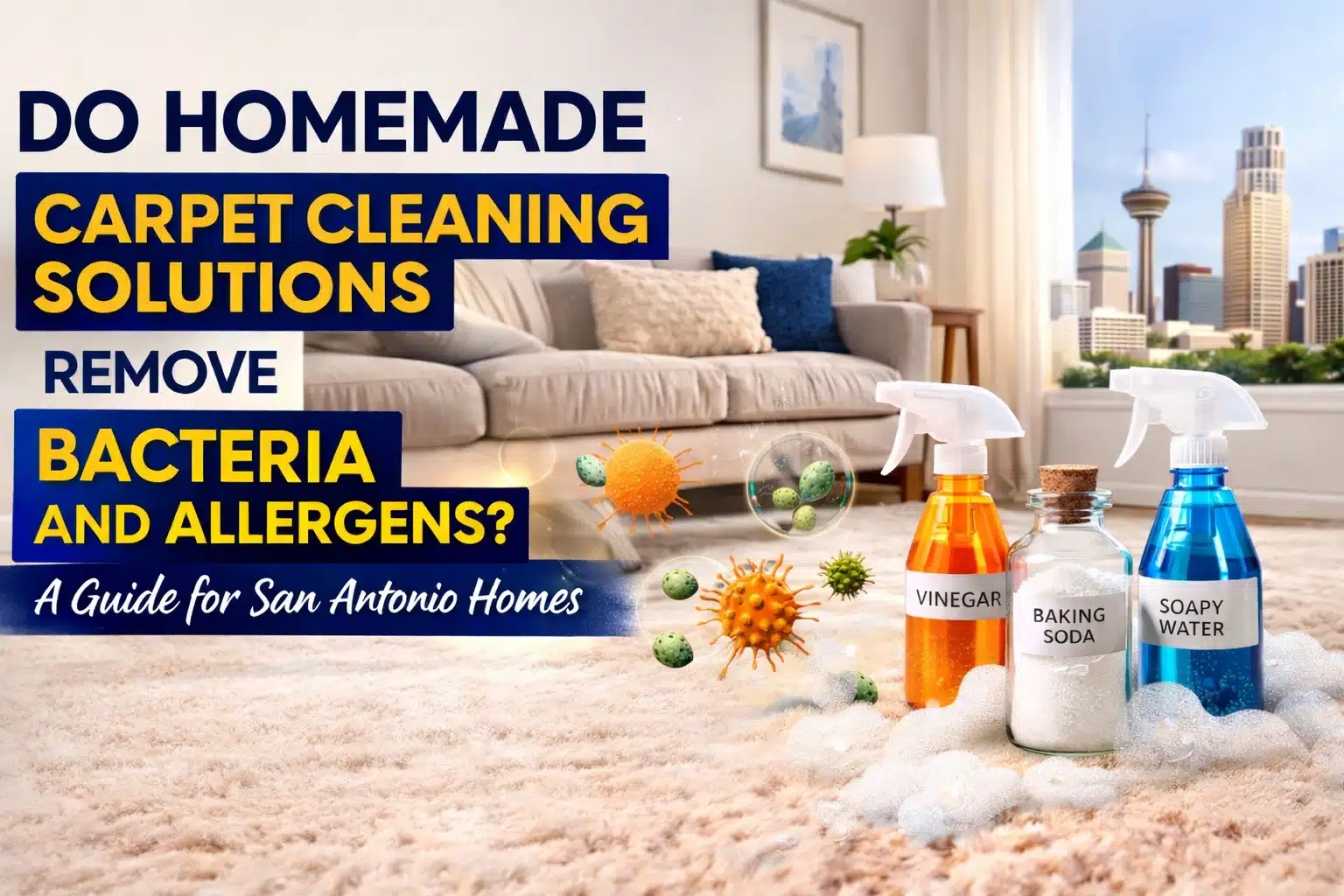
Carpet cleaning is not just about appearance; it’s about maintaining a healthier indoor environment. Various homeowners rely on homemade cleaning solutions made from ingredients such as baking soda, vinegar, and dish soap to eliminate odors and stains. These methods are often seen as affordable, safe, and easy to use.
At first glance, they can seem effective. Carpets may look cleaner, and unpleasant smells may fade. But an important question often goes unaddressed: do these solutions actually remove harmful contaminants?
Understanding whether homemade methods can eliminate bacteria and allergens is essential, especially in environments like San Antonio, where dust, pollen, and humidity contribute to indoor air quality concerns. While DIY cleaning can help with surface-level issues, it may not be enough to address what’s happening deep within carpet fibers.
What Lives Inside Your Carpet?
-
Carpets as a Reservoir for Contaminants
Carpets do more than provide comfort; they act like filters, trapping particles from the air and daily activity. Over time, they accumulate dust, pollen, pet dander, bacteria, and other microscopic contaminants.
According to general guidance from the U.S. Environmental Protection Agency (EPA), indoor environments can contain a variety of pollutants that settle into carpets and soft surfaces. Without proper cleaning, these particles can remain trapped and continue to affect indoor air quality.
In San Antonio homes, this issue is amplified by environmental conditions. Outdoor dust, seasonal allergens, and humidity all contribute to what gets embedded into carpet fibers.
-
The Difference Between Dirt and Microorganisms
It’s important to understand that visible dirt is only part of the problem. Even when a carpet looks clean, it may still contain bacteria and allergens that are not visible.
Homemade cleaning solutions may remove surface dirt, but bacteria and allergens often require deeper, more targeted cleaning methods to be effectively reduced.
Do Homemade Carpet Cleaning Solutions Kill Bacteria?
-
Limited Antibacterial Effect
Some household ingredients, such as vinegar, are known to have mild antibacterial properties. However, their effectiveness is limited and depends on concentration, contact time, and the type of bacteria involved.
In most home cleaning situations, these solutions are diluted and applied briefly, which reduces their ability to fully eliminate bacteria. While they may reduce some microbial presence, they are unlikely to provide a thorough level of sanitization.
-
Surface Cleaning vs Deep Sanitization
Homemade methods typically focus on surface cleaning. They may remove visible dirt and improve the appearance of the carpet, but they do not penetrate deeply enough to address bacteria embedded within the fibers or padding.
Without proper extraction and controlled treatment, bacteria can remain in the carpet even after cleaning. This means that while the carpet may look clean, it may not be hygienically clean.
Can DIY Cleaning Remove Allergens from Carpets?
-
Allergens Are Deeply Embedded
Allergens such as pollen, dust mites, and pet dander are extremely small and can settle deep within carpet fibers. Once trapped, they are not easily removed by surface cleaning methods.
According to environmental health guidance, effective removal of allergens requires thorough cleaning techniques that reach deep into the carpet structure. Homemade solutions, while helpful for light cleaning, are not designed for this level of removal.
-
Temporary Improvement vs Long-Term Results
DIY cleaning may temporarily reduce allergens on the surface, which can provide short-term relief. However, without proper extraction, these particles remain within the carpet and can be released back into the air through daily activity.
This is particularly relevant in San Antonio, where high pollen levels and dust exposure can quickly replenish allergen levels inside the home.
Why Homemade Carpet Cleaning Solutions Often Fall Short
-
Lack of Extraction Process
One of the main limitations of homemade cleaning is the absence of extraction. Professional cleaning equipment removes both the cleaning solution and the contaminants it loosens.
In contrast, DIY methods typically leave moisture and residue behind. This not only reduces effectiveness but can also contribute to further buildup over time.
-
Residue That Attracts Contaminants
Homemade solutions often leave behind residue, especially when soap or detergent is used. This residue can attract dust and allergens, causing the carpet to become dirty again more quickly.
Over time, this creates a cycle where carpets require more frequent cleaning but never achieve a deep level of cleanliness.
-
Moisture Retention and Its Effects
Excess moisture is another concern. When carpets remain damp for extended periods, it can create conditions that allow bacteria and other microorganisms to persist.
In humid climates like San Antonio, this risk is even higher. Proper drying is essential to prevent moisture-related issues and maintain a healthy indoor environment.
The Role of Professional Carpet Cleaning in Removing Bacteria and Allergens
-
Deep Cleaning and Extraction
Professional carpet cleaning uses specialized equipment to reach deep into carpet fibers and extract contaminants. This process removes not only visible dirt but also bacteria and allergens that are embedded within the carpet.
By removing these particles rather than just loosening them, professional cleaning provides a more thorough and lasting result.
-
Controlled Cleaning Solutions
Professional-grade cleaning solutions are designed to be effective against a wide range of contaminants while remaining safe for carpet fibers. They are carefully formulated to clean without leaving behind harmful residue.
This ensures that carpets are not only cleaner but also less likely to attract new dirt and allergens.
-
Improved Indoor Air Quality
By removing trapped particles, professional cleaning can contribute to better indoor air quality. This is particularly important for households with allergies or respiratory sensitivities.
In San Antonio homes, where environmental factors increase exposure to dust and pollen, this level of cleaning can make a noticeable difference.
Common Misconceptions About DIY Carpet Cleaning
-
If It Looks Clean, It Is Clean
One of the most common misconceptions is that visual cleanliness equals hygienic cleanliness. In reality, carpets can look clean while still containing bacteria and allergens.
-
Natural Ingredients Are Always Safer
While natural ingredients are often perceived as safer, they are not always effective for deep cleaning. Safety and effectiveness are not the same, and both are important when maintaining carpets.
-
Frequent DIY Cleaning Is Enough
Regular cleaning is important, but frequency alone does not guarantee effectiveness. Without the right methods, repeated cleaning may not address deeper issues.
Best Practices for Maintaining a Healthier Carpet
Maintaining a clean carpet requires a balanced approach. Regular vacuuming helps remove surface particles and prevents buildup from settling deeper into the fibers. Addressing spills quickly can also reduce the chances of long-term contamination.
However, for deeper cleaning, it is important to use methods that go beyond surface-level treatment. Combining routine maintenance with periodic professional cleaning provides the best results for both appearance and hygiene.
Frequently Asked Questions
Do homemade carpet cleaning solutions remove bacteria effectively in San Antonio homes?
Homemade solutions may reduce some surface bacteria, but they do not provide deep sanitization. In San Antonio, where dust and humidity contribute to contamination, deeper cleaning methods are often needed.
Can DIY carpet cleaning remove allergens like pollen and dust mites?
DIY methods may remove some surface allergens, but they cannot fully extract deeply embedded particles. Professional cleaning is more effective for long-term allergen reduction.
Is vinegar enough to disinfect carpets?
Vinegar has mild antibacterial properties, but it is not strong enough to fully disinfect carpets, especially when diluted for household use.
Why do allergies persist even after cleaning carpets at home?
Allergens can remain trapped deep within carpet fibers. Without proper extraction, they can continue to affect indoor air quality even after cleaning.
What is the best way to remove bacteria and allergens from carpets in San Antonio?
The most effective approach is deep cleaning with proper extraction and controlled drying. This removes contaminants rather than just redistributing them.
Conclusion
Homemade carpet cleaning solutions can be useful for quick fixes and light maintenance, but they are not designed to remove bacteria and allergens at a deep level. While they may improve the appearance of your carpet, they often fall short in addressing hidden contaminants.
Understanding the difference between surface cleaning and deep cleaning is essential for maintaining a healthy home. In environments like San Antonio, where dust, allergens, and humidity play a significant role, relying solely on DIY methods may not be enough.