Spilled your morning coffee before you even had a sip? Got a mystery stain that appeared out of nowhere? Before you panic or reach for an expensive store-bought cleaner take a look inside your kitchen cupboard. Chances are, you already have everything you need to tackle most common carpet stains right now.
We’ve been cleaning carpets professionally in South Australia for years, and we’ll tell you straight: some of the best first-response treatments come from everyday household ingredients. The key is knowing which solution to use, when to use it, and just as importantly when to call in the professionals.
Let’s walk through it all.
Why DIY Carpet Cleaning Works (and When It Doesn’t)
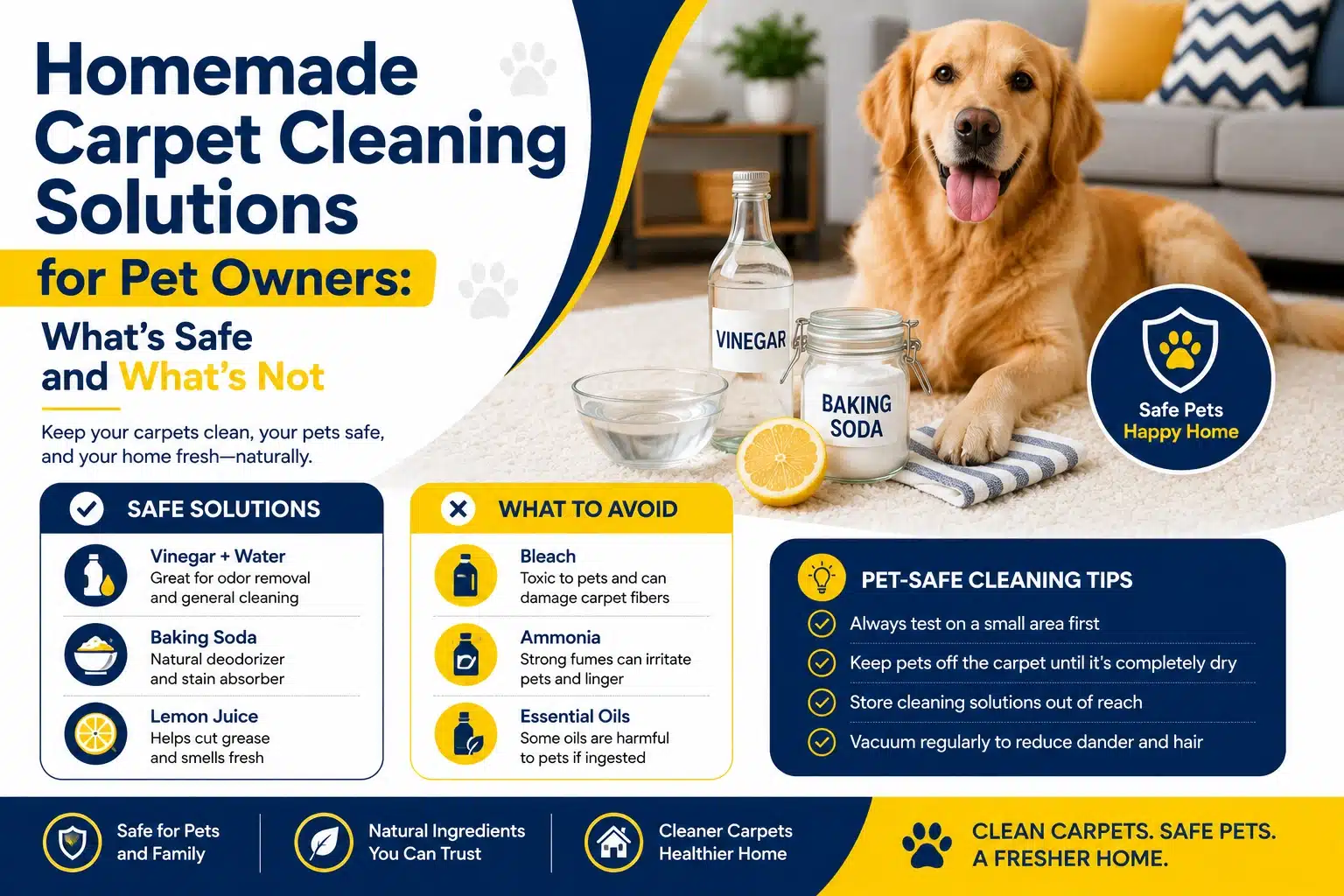
There’s a reason your grandmother swore by vinegar and baking soda. These ingredients work on a chemical level: acids neutralise alkaline stains, absorbents lift moisture, and enzymes break down organic matter. They’re gentle on most fibres, safe for pets and kids, and cost almost nothing.
That said, DIY solutions work best on:
- Fresh stains (within the first 30–60 minutes)
- Surface-level spills that haven’t soaked deep into the pile
- Common household stains like coffee, wine, mud, and pet accidents
Where DIY falls short is with set-in stains, deep cleaning, or delicate fibres like wool, silk, or hand-woven rugs. For those, attempting a DIY fix can actually cause more damage colour bleeding, fibre distortion, or mould from over-wetting. In those cases, a professional clean is always the smarter move.
Pro tip from the SA Carpet Cleaning team: Always test any solution on a hidden area of your carpet first — inside a wardrobe or behind a piece of furniture. Wait 5 minutes and check for colour change before proceeding.
The 5 Most Useful Household Ingredients for Carpet Cleaning
Before we get into the recipes, here’s your starter kit. These five ingredients handle the vast majority of household carpet stains between them.
1. White Vinegar
A mild acid that neutralises alkaline stains, deodorises, and kills some bacteria. It’s your go-to for pet odours, light stains, and general freshening. The smell dissipates within an hour or two as it dries.
2. Bicarbonate of Soda (Baking Soda)
An alkaline powder that absorbs moisture, neutralises acids, and deodorises. Brilliant on grease, odours, and as a drying agent after wet treatment. Don’t confuse it with baking powder they’re not the same.
3. Dish Soap (Liquid)
A gentle surfactant that lifts oils and breaks the bond between stain particles and carpet fibres. Use sparingly too much creates a residue that attracts more dirt.
4. Hydrogen Peroxide (3%)
A mild bleaching and disinfecting agent. Effective on organic stains like blood, wine, and pet accidents. Only use the 3% concentration you find at the chemist stronger versions can bleach carpet. Avoid on dark or coloured carpets unless tested first.
5. Table Salt
An old-fashioned but effective first-responder. Salt draws moisture out of the carpet before a stain has time to set. Best used immediately after a spill while you prepare your main cleaning solution.
8 DIY Carpet Cleaning Recipes That Actually Work
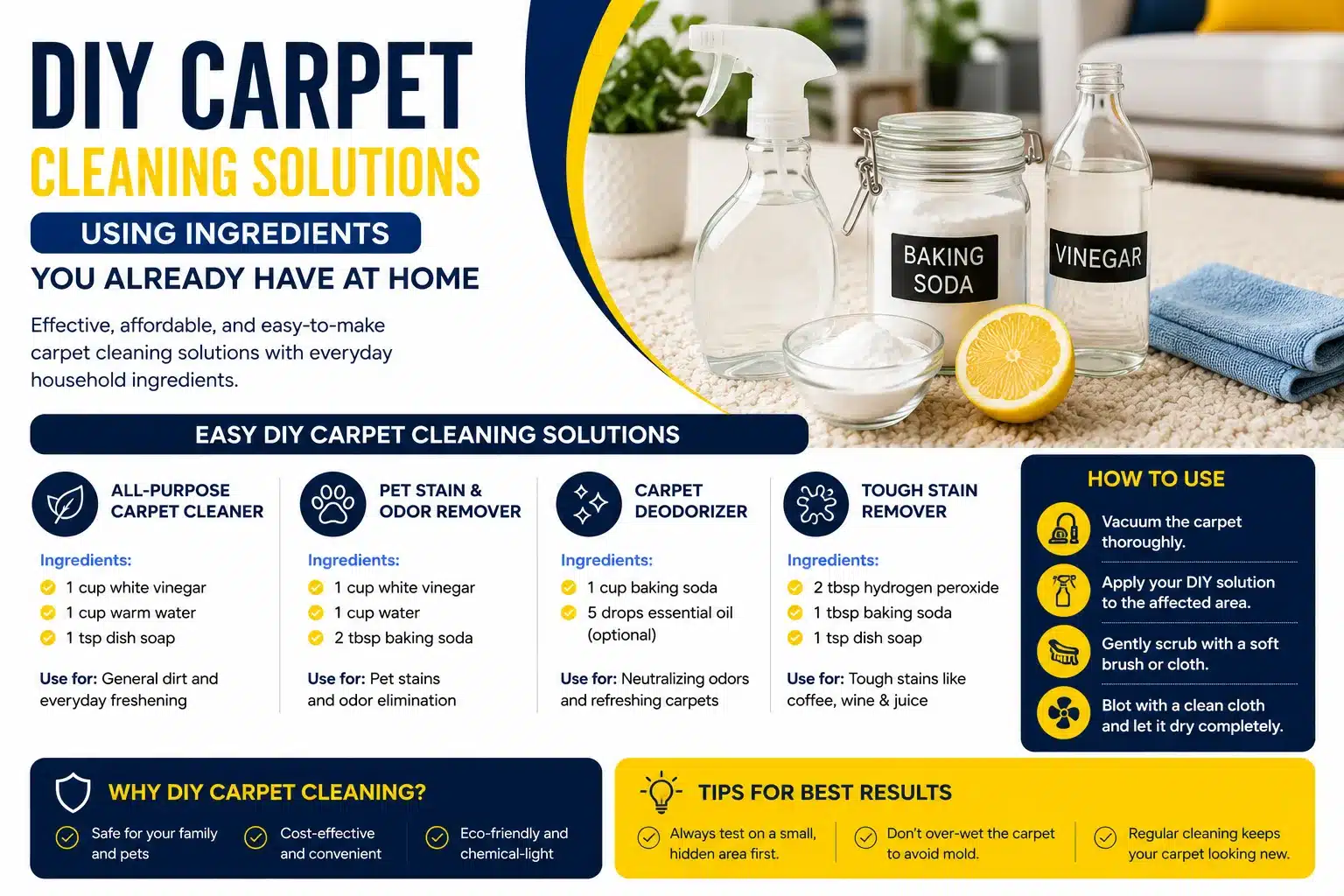
Recipe 1: The All-Purpose Spill Solution
Best for: Coffee, tea, juice, most food spills
What you need:
- 1 tablespoon dish soap
- 1 tablespoon white vinegar
- 2 cups warm water
How to use it: Mix the ingredients in a small bowl or spray bottle. Blot the stain with a clean white cloth to remove as much liquid as possible first always blot, never rub. Apply the solution with another clean cloth, working from the outside of the stain inward. Blot, don’t scrub. Rinse with cold water and blot dry. Repeat if needed.
Why it works: The surfactant in the dish soap lifts the stain particles, while the vinegar neutralises tannins (found in coffee and tea) and prevents the stain from yellowing over time.
Recipe 2: The Red Wine Rescuer
Best for: Red wine, fruit juice, cordial
What you need:
- Salt (generous handful)
- 1 cup sparkling or cold water
- 1 tablespoon dish soap
How to use it: Act fast. Pour salt generously over the fresh spill and let it sit for 3–5 minutes to absorb the liquid. Vacuum or scrape the salt away. Then mix the dish soap with the water and apply to the stain using a clean cloth, blotting firmly. Rinse with cold water and pat dry. Avoid using hot water it sets the stain.
Why it works: Salt draws out the liquid before it bonds to fibres. Cold water keeps the proteins in the wine from setting, which hot water would accelerate.
Recipe 3: The Pet Stain & Odour Eliminator
Best for: Urine, vomit, pet accidents
What you need:
- 1 cup white vinegar
- 1 cup warm water
- 2 teaspoons bicarbonate of soda
- A few drops of dish soap
How to use it: Blot up as much of the mess as possible first using paper towels (use your weight stand on them for maximum absorption). Mix the vinegar, water, and dish soap and apply generously to the affected area. Let it soak for 5–10 minutes, then blot clean. Once dry, sprinkle bicarbonate of soda over the area, let it sit for a few hours (overnight is ideal), then vacuum thoroughly.
Why it works: Vinegar neutralises the ammonia in urine, eliminating the smell at its source rather than masking it. The bicarbonate of soda absorbs any residual moisture and odour.
⚠️ Important: If the urine has soaked through to the underlay or subfloor, a surface clean won’t be enough. This kind of deep contamination requires professional extraction equipment to fully remove — and if left untreated, it creates conditions for mould growth and permanent odour.
Get a professional pet stain treatment from SA Carpet Cleaning →
Recipe 4: The Grease & Oil Remover
Best for: Butter, cooking oil, grease, lipstick, shoe polish
What you need:
- Bicarbonate of soda (generous amount)
- 1 teaspoon dish soap
- Warm water
How to use it: Scrape off any solid residue gently with a spoon. Sprinkle bicarbonate of soda over the stain and leave for 15–20 minutes to absorb the oil. Vacuum up the powder. Mix the dish soap with a small amount of warm water to form a light lather, then apply to the stain and blot with a clean cloth. Rinse and blot dry.
Why it works: Baking soda is highly absorbent and draws oil molecules out of the fibre before you clean. Dish soap, designed to cut grease on dishes, works just as well on carpet fibres.
Recipe 5: The Blood Stain Solution
Best for: Fresh or dried blood
What you need:
- Cold water (never hot)
- 1 tablespoon dish soap
- OR 1–2 tablespoons hydrogen peroxide (3% only) for stubborn stains
How to use it: For fresh blood: blot immediately with a cold, damp cloth. Mix dish soap with cold water and blot the stain repeatedly, rinsing the cloth often. Rinse with cold water and blot dry.
For dried blood: try the dish soap method first. If the stain persists, test hydrogen peroxide on a hidden area. If no discolouration occurs, apply a small amount directly to the stain, let it fizz for 1–2 minutes, then blot clean. Rinse with cold water.
Why it works: Blood contains proteins that coagulate in heat hot water permanently sets it. Cold water and a gentle detergent lift the protein before it bonds to the fibre. Hydrogen peroxide breaks down haemoglobin through oxidation.
Recipe 6: The Mud & Dirt Refresher
Best for: Tracked-in mud, dirt, general grime
What you need:
- Nothing initially just patience
- 1 tablespoon dish soap
- 2 cups warm water
How to use it: Here’s the counterintuitive move: don’t touch wet mud. Let it dry completely first. Trying to clean wet mud spreads it further into the pile. Once dry, break up and vacuum the dried dirt. Then apply the dish soap solution and blot clean, working from the edges inward. Rinse and blot dry.
Why it works: Wet mud is sticky and spreads easily. Dry mud is brittle and lifts out with the vacuum, dramatically reducing the amount of actual staining you need to treat.
Recipe 7: The Deodorising Dry Powder
Best for: General carpet freshening, musty smells, pet odours between cleans
What you need:
- 1 cup bicarbonate of soda
- 10–15 drops of essential oil (lavender, eucalyptus, or tea tree work well)
How to use it: Mix the essential oil into the bicarbonate of soda thoroughly and let it sit in a jar or shaker for a few hours so the scent absorbs. Sprinkle lightly over your carpet, leave for 30–60 minutes (or overnight for stronger odours), then vacuum thoroughly. Make sure your vacuum filter is clean for best results.
Why it works: Bicarbonate of soda is amphoteric it neutralises both acidic and alkaline odour molecules rather than masking them. Essential oils add a pleasant scent and tea tree in particular has antimicrobial properties.
Recipe 8: The Hydrogen Peroxide Brightener
Best for: Light-coloured carpets with general dullness, mild staining, or yellowing
What you need:
- ½ cup hydrogen peroxide (3%)
- 1 teaspoon dish soap
- 1 cup warm water
How to use it: Test first always. Mix the ingredients and apply to a small hidden patch. Wait 10 minutes. If there’s no colour change, you’re good to proceed. Apply to the stained or dull area, let sit for 5 minutes, then blot clean. Rinse well with cold water and blot dry.
Why it works: Hydrogen peroxide is a mild oxidising agent that breaks down chromophores — the chemical structures that give stains their colour. It’s essentially a gentle bleach.
⚠️ Do not use on dark, vibrant, or patterned carpets. Spot testing is non-negotiable here.
Common Mistakes That Make Stains Worse
Knowing what not to do is just as valuable as any recipe above.
Rubbing instead of blotting. Rubbing spreads the stain sideways and pushes it deeper into the pile. Always blot with firm, clean strokes from the outside in.
Using hot water. Heat sets protein-based stains (blood, egg, dairy) permanently. Use cool or lukewarm water for most treatments.
Soaking the carpet. Over-wetting causes moisture to seep into the underlay, creating ideal conditions for mould and mildew. Use solutions sparingly and always blot dry thoroughly after treatment.
Leaving soap residue. Detergent left in the carpet attracts dirt like a magnet. Always rinse cleaned areas with plain cold water and blot dry.
Waiting too long. The single biggest factor in whether a stain comes out is time. The first 10–15 minutes make a dramatic difference — act immediately.
Using coloured cloths. Dye from coloured rags can transfer to wet carpet. Always use white or colourless cloths.
What DIY Can’t Fix — And Why That’s Okay
Here’s the honest truth that most DIY guides won’t tell you: household solutions are excellent for spot treatment and maintenance, but they don’t replace a professional deep clean.
Over time, carpets accumulate soil deep within the pile that no surface solution reaches. This includes allergens, dust mites, bacteria, and fine particulate matter that attaches to fibre roots. Regular foot traffic pushes this debris deeper with every step. Vacuuming removes surface material but misses what’s embedded below.
Professional hot water extraction (also called steam cleaning) uses water heated to over 100°C, injected at high pressure and immediately extracted, pulling deep-set contaminants out of the pile. It’s the only method that genuinely resets a carpet to something close to its original condition.
Industry guidelines from carpet manufacturers typically recommend a professional clean every 12–18 months for residential carpets, and more frequently in homes with pets, children, or allergy sufferers.
Signs you need a professional clean, not a DIY fix:
- Stains that have dried and set despite early treatment
- Persistent odour even after multiple DIY attempts (especially pet urine that has reached the underlay)
- Carpet that looks or smells dull even after vacuuming
- Visible mould, mildew, or dampness
- Allergies or respiratory symptoms that worsen indoors
- It’s been over 12 months since your last professional clean
Choosing the Right Professional Carpet Cleaner
When you’re ready for a professional clean, there are a few things worth knowing.
Hot water extraction (commonly called steam cleaning) is the most effective method for deep cleaning and is recommended by most carpet manufacturers.
Dry cleaning methods use minimal moisture and are suitable for some carpet types and situations where fast drying is important.
Encapsulation is a low-moisture commercial method that works well for maintenance cleaning in commercial spaces.
Ask your cleaner whether their equipment is truck-mounted (more powerful, better extraction) or portable. Truck-mounted systems generally deliver better results.
Always check that the company uses pre-treatment solutions and is willing to discuss your specific stains before quoting.
SA Carpet Cleaning provides professional hot water extraction carpet cleaning across South Australia. Our team treats every job individually — we assess your carpet type, identify problem areas, and pre-treat stains before the main clean. We’re transparent about what we can and can’t achieve, and we back our work.
Get a free quote from SA Carpet Cleaning → View our residential carpet cleaning service →
Maintaining Clean Carpets Between Professional Visits
A few habits make a significant difference to how long your carpet stays clean and fresh.
Vacuum regularly and properly. Aim for at least twice a week in high-traffic areas. Vacuum slowly — fast passes miss more than they capture. Use a vacuum with a HEPA filter if anyone in the household has allergies.
Act on spills immediately. Every minute counts. Keep a clean white cloth and a spray bottle of your all-purpose solution (Recipe 1) in an accessible spot so you’re ready when accidents happen.
Use entrance mats. A good mat inside and outside each entrance captures a significant amount of soil before it reaches your carpet. Clean the mats regularly.
Implement a no-shoes policy. The bottom of shoes carry bacteria, oils, pesticides, and fine grit that accelerate carpet wear. Even a partial policy (removing shoes in bedrooms, for example) helps considerably.
Rotate furniture periodically. Furniture creates compression patterns and uneven wear. Moving pieces by even a few centimetres every year distributes traffic more evenly.
Groom your carpet. A carpet rake or stiff brush keeps fibres upright between vacuuming, which improves appearance and reduces matting.
Frequently Asked Questions
Is white vinegar safe for all carpet types? Diluted white vinegar (mixed 1:1 with water) is generally safe for most synthetic carpets like nylon and polyester. It’s not recommended for wool carpets, which can be damaged by acid. Always test first.
How long should I leave bicarbonate of soda on the carpet? A minimum of 30 minutes for general freshening; overnight for strong odours. The longer it sits, the more it absorbs. Just make sure the carpet is dry before applying it — wet baking soda can form a paste that’s harder to vacuum out.
Can I use these solutions in a carpet cleaning machine? The vinegar and water mixture (1:1) can be used in a carpet cleaning machine’s solution tank in place of commercial cleaning fluid. Avoid dish soap in machines — it creates too much foam. Never put bicarbonate of soda in a machine.
My carpet smells like vinegar after cleaning. Is that normal? Yes, completely normal. The smell dissipates within 1–2 hours as the carpet dries. Speed this up by opening windows or running a fan. If the smell lingers beyond a day, the carpet may still be damp — use a fan or dehumidifier.
Will hydrogen peroxide bleach my carpet? It can, especially on dark or naturally-dyed carpets. The 3% concentration from the chemist is much weaker than household bleach, but it can still lighten certain dyes. This is why testing on a hidden area is non-negotiable before using it anywhere visible.
How do I get the sticky residue out after cleaning? Sticky residue is usually leftover detergent. Mix 1 tablespoon of white vinegar with 2 cups of warm water and apply to the sticky area. Blot clean, then blot with plain cold water to rinse. The acid in the vinegar helps break down the soap residue.